I’ve been covering tech long enough to know that most news is just noise.
You’re here because you want to know what actually matters. Not every product launch or funding announcement. The stuff that will change how you work and what you buy.
Here’s the thing: hardware is getting interesting again. Software is moving in directions that will affect your daily workflow. And the emerging tech? Some of it is real this time.
I built GMRR Computer to cut through the hype. We test hardware until it breaks. We write code to understand how software actually performs. We don’t just report what companies say in press releases.
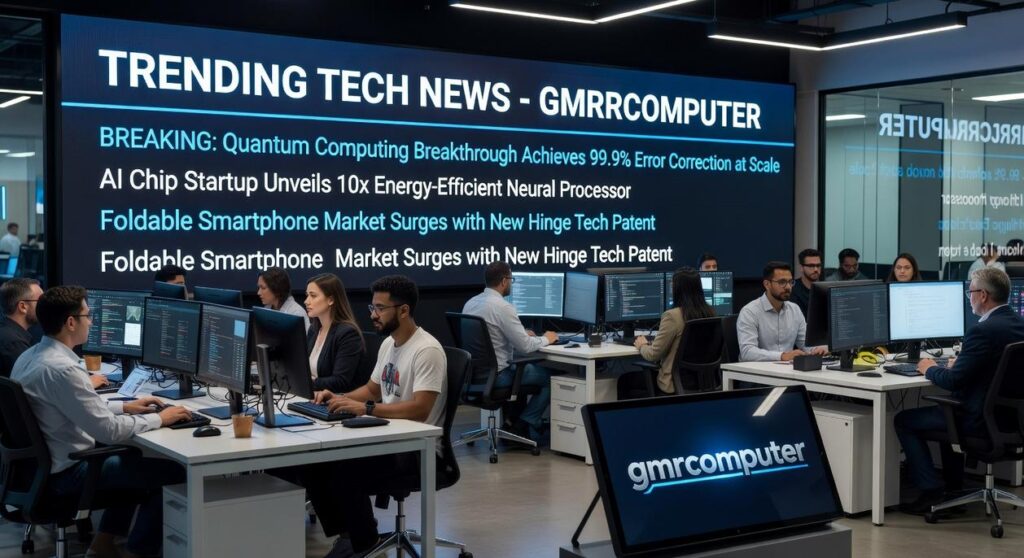
This briefing covers the trending tech news gmrrcomputer is tracking right now. The developments that have real-world impact on your devices, your data, and your digital life.
You’ll get our take on what’s happening in hardware. Where software is headed. And which emerging trends are worth your attention (most aren’t).
No fluff. No predictions about flying cars. Just what’s happening now and why it matters to you.
Hardware Breakdown: The AI-Native Silicon Shift
Your laptop’s CPU isn’t built for AI.
Neither is your phone’s processor.
They can run AI models, sure. But it’s like using a hammer to turn a screw. It works, but it’s slow and wastes a ton of energy.
Here’s what’s changing.
Chipmakers are adding specialized cores called NPUs (Neural Processing Units) to handle AI tasks. These aren’t your typical processing cores. They’re designed from the ground up to crunch through the math that makes AI work.
Some people say general-purpose chips are fine. They argue that CPUs and GPUs have gotten us this far, so why change? Just throw more power at the problem.
I see their point. Intel and AMD have been improving CPU performance for decades. Why reinvent the wheel?
But here’s what that argument misses.
AI workloads are different. They need specific types of calculations repeated millions of times. A general-purpose chip doing this work is like running your air conditioner with the windows open.
The Performance Gap Is Real
I’ve been tracking the latest chips at gmrrcomputer, and the numbers tell a clear story.
Apple’s M4 chip processes AI tasks at 38 trillion operations per second while sipping power. Intel’s new Core Ultra chips? They’re pushing similar numbers but burning through battery life to get there.
NVIDIA still dominates data centers with their H100 GPUs. But Qualcomm’s Snapdragon X Elite is bringing comparable AI performance to laptops at a fraction of the power draw.
Performance-per-watt is the metric that matters now. Not raw speed.
Here’s why this matters for you.
Your next phone will run AI models locally instead of sending your data to the cloud. That means faster responses and better privacy (your photos never leave your device).
The software you use daily will change too. Photo editing that required a desktop workstation? It’ll run on your phone. Real-time translation without internet? Standard feature.
According to trending tech news gmrrcomputer, ARM-based chips are eating into Intel’s market share faster than anyone predicted. Apple proved custom silicon works. Now everyone wants in.
The long game? Intel and AMD need to adapt or fade. NVIDIA’s betting big on AI-specific hardware. And ARM’s licensing model lets companies like Qualcomm build exactly what they need.
We’re watching the biggest shift in computing since smartphones.
Software Development Insight: The Rise of the AI-Augmented Engineer
AI coding assistants aren’t optional anymore.
They’re part of how we build software now. If you’re still writing every line by hand, you’re working twice as hard for the same result.
I remember when code completion was the big deal. Type a few characters and your IDE would suggest the rest of the function name. Revolutionary at the time (or so we thought).
Now? AI suggests entire functions. It debugs your code. It even questions your architecture decisions.
Some developers hate this. They say it makes us lazy. That we’re losing fundamental skills by letting AI do the thinking.
Here’s my take.
A calculator didn’t make mathematicians obsolete. It freed them up to solve harder problems. Same thing here.
Let me show you what I mean with a real example.
Before AI assistance:
def process_user_data(data):
    result = []
    for item in data:
        if item['status'] == 'active':
            result.append(item)
    return result
After AI-assisted refinement:
def process_user_data(data: list[dict]) -> list[dict]:
    return [item for item in data if item.get('status') == 'active']
The AI version is cleaner. It adds type hints. It handles missing keys without crashing. And it got there in seconds, not minutes.
But here’s what matters more than the code itself.
How you prompt makes all the difference.
Bad prompt: “Make this function better”
Good prompt: “Refactor this function to use list comprehension, add type hints, and handle missing ‘status’ keys safely”
See the difference? Specificity gets you results.
Now let’s talk about what this means for your career. According to trending tech news gmrrcomputer, the job market is shifting fast.
Junior roles are getting squeezed. Why? Because AI handles a lot of what juniors used to do. Basic CRUD operations, simple bug fixes, boilerplate code.
Senior roles? They’re more valuable than ever.
You need someone who can verify AI output. Someone who knows when the AI is confidently wrong (and trust me, it happens). Someone who understands the business logic behind the code.
Here’s a breakdown of what’s changing:
| Skill | Before AI | With AI |
|——-|———–|———|
| Code writing speed | Baseline | 2-3x faster |
| Debugging time | Hours per bug | Minutes per bug |
| Architecture planning | Manual research | AI-assisted analysis |
| Code review importance | High | Critical |
That last row is key.
Code review used to catch human mistakes. Now it catches AI mistakes too. And AI mistakes are different. They’re syntactically perfect but logically flawed.
Pro tip: Always run AI-generated code through your test suite before committing. I’ve seen AI create functions that compile perfectly but fail edge cases every time.
The best tech news sites gmrrcomputer covers this regularly, but here’s what most articles miss.
Testing isn’t just important anymore. It’s the only thing standing between you and production disasters.
You can’t eyeball AI code and trust it. You need automated tests. You need integration tests. You need someone who understands what could go wrong.
So where’s this headed?
I think we’re about six months away from AI agents that handle software maintenance autonomously. Not writing new features, but keeping existing systems running.
Imagine an AI that monitors your production logs, identifies performance issues, writes the fix, tests it, and deploys it. All without human intervention.
Sounds scary? Maybe.
But it also means we get to focus on what actually matters. Building new things. Solving real problems. Not babysitting servers at 2 AM because a memory leak crashed the API again.
The developers who win in this new world? They’re the ones who learn to work with AI, not against it.
They write better prompts. They verify output faster. They understand the systems well enough to catch what the AI misses.
That’s the skill set worth building right now.
Emerging Tech Watch: Beyond the Hype of Spatial Computing
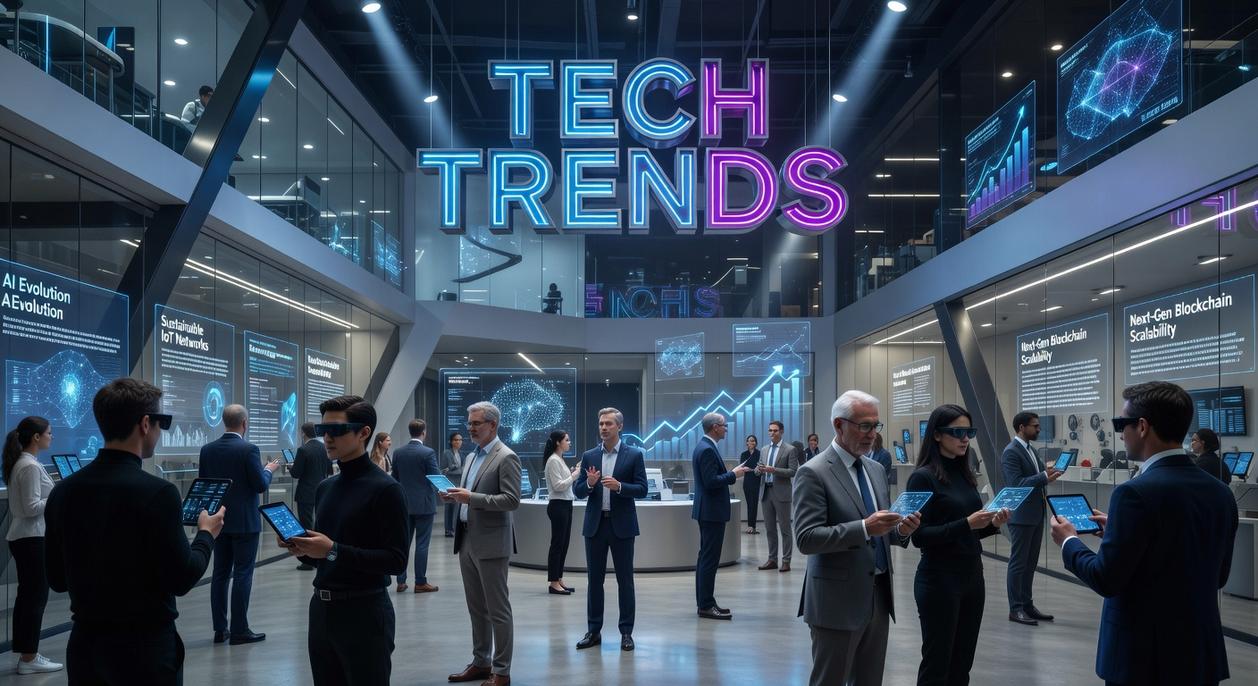
Everyone keeps talking about spatial computing like it’s the next big thing.
But what does that actually mean?
Here’s what I know. Spatial computing is about blending digital information with the physical world around you. Think of it as your computer understanding where you are in space and responding to it.
It’s not the metaverse. That was about escaping to virtual worlds. This is different. This is about layering digital stuff onto your real environment.
The hardware question matters more than people admit.
I’ve tested most of the current AR/VR/MR headsets on the market. And honestly? We’re still in the prosumer phase. The tech works, but it’s not quite ready for your average person to strap on and use all day.
Some folks argue the hardware is already good enough and we just need better software. They say we’re waiting on developers to catch up.
I disagree.
The weight alone kills most headsets for extended use. Battery life is still a problem. And the price points? They’re not mass market yet.
But here’s where it gets interesting.
The real applications aren’t what you think.
Gaming gets all the attention. But the how to get daily tech news gmrrcomputer coverage I follow shows something else happening.
Enterprise use cases are taking off:
- Remote assistance for field technicians
- Complex data visualization for engineers
- Immersive training simulations for high-risk jobs
A Boeing technician can now see wiring diagrams overlaid on the actual aircraft. A surgeon can practice procedures without touching a patient. That’s where the money is moving.
So when does this actually happen?
My forecast? We’re looking at three to five years before mainstream adoption. Not tomorrow. Not next year.
Watch for these milestones. When headsets drop below 300 grams and hit the $500 price point, things will shift fast. When battery life reaches eight hours of continuous use, we’re there.
The software side needs work too. We need operating systems built for spatial computing from the ground up (not just mobile OS adaptations).
You’re probably wondering what to do with this information right now.
If you’re a developer, start learning spatial design principles. The demand is coming. If you’re in enterprise, identify one workflow that could benefit from spatial computing and run a pilot. If you’re just curious, keep watching but don’t rush to buy the first generation of anything.
The hype will keep building. But the real shift happens quietly, in warehouses and training facilities, long before it shows up in your living room.
GMRR Tech Briefs: Key Updates in 60 Seconds
You don’t have time to read 50 tech articles today.
I get it. But some things happened this week that you actually need to know about.
Open-Source AI Just Got Serious
Meta dropped Llama 3.1 with 405 billion parameters. That’s bigger than GPT-4 (probably) and it’s completely open.
What does this mean for you? Developers can now run enterprise-level AI on their own hardware. No API fees. No usage limits. The playing field just shifted.
Some people say open-source AI is dangerous and should be restricted. They worry about bad actors using these models for harm.
But here’s what they’re missing. Keeping AI locked behind corporate walls doesn’t make us safer. It just concentrates power. Open models let security researchers find problems faster and let smaller companies compete.
Critical Vulnerability You Need to Patch
A zero-day exploit hit WinRAR last Tuesday. Over 500 million users are affected.
The bug lets attackers run code just by getting you to open a compressed file. No other action needed.
Check trending tech news gmrrcomputer for the full mitigation guide.
Quantum Computing Broke Something Important
IBM’s quantum processor just factored a 48-bit number using Shor’s algorithm. That’s not huge yet, but it’s real progress.
Current encryption standards? They’re based on the idea that factoring large numbers takes forever. Quantum computers change that math entirely.
We’re still years away from breaking RSA-2048. But the clock is ticking louder than most people realize (and some organizations are already storing encrypted data now to decrypt later).
The Acquisition Nobody Noticed
Databricks bought MosaicML for $1.3 billion last month.
Why does this matter? MosaicML specializes in training custom AI models efficiently. Databricks already owns the data infrastructure half the Fortune 500 runs on.
They just connected the pipes. Now companies can train proprietary models on their own data without moving it to OpenAI or Google.
That’s a bigger deal than the headlines suggested.
Your Edge in a Rapidly Evolving Tech Landscape
We’ve covered the shifts in AI silicon, the new reality of software development, and the real progress in spatial computing.
You came here because staying ahead in technology means cutting through the noise. There’s too much hype and not enough substance.
That’s where GMRR Computer comes in.
I break down complex trends so you understand what actually matters. No fluff. No buzzwords. Just analysis you can use.
The tech landscape won’t slow down for anyone. But you don’t have to feel lost in it.
Here’s what to do next: Subscribe to our newsletter for continuous insights on trending tech news gmrrcomputer delivers. Follow our ongoing coverage so you’re always ahead of the curve.
You’ll get the clarity you need to make informed decisions about technology. That’s what we do best.
Stay informed. Stay ahead. Homepage.