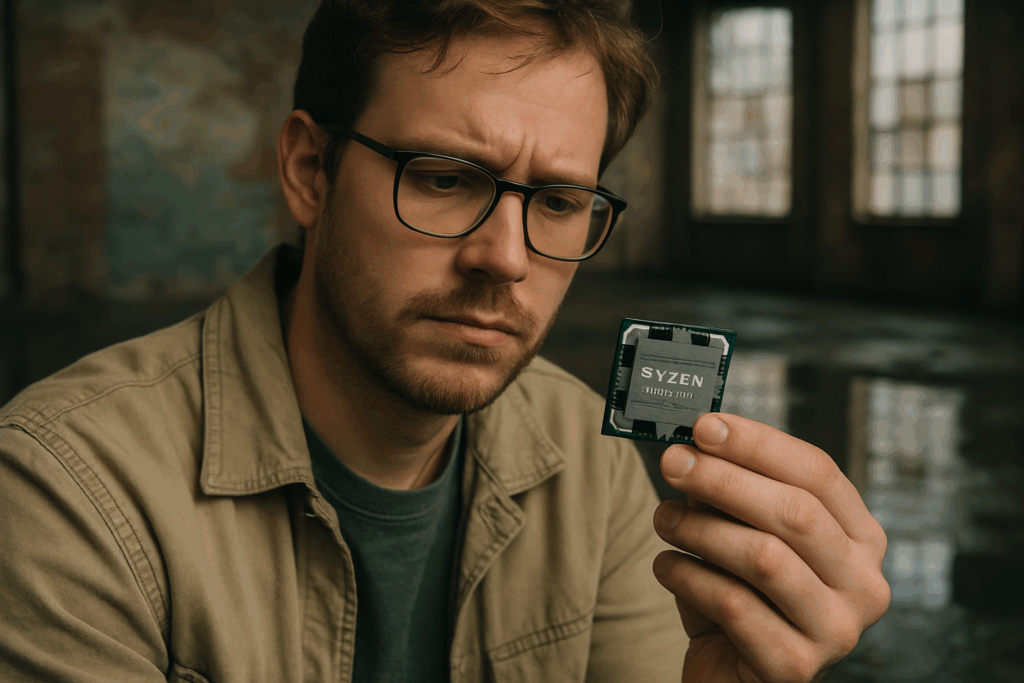

I track gaming tech every single day because things move too fast to miss even a week.
You’re probably tired of sifting through press releases that sound exciting but don’t tell you what actually matters for your gaming rig. I know the feeling.
Here’s the reality: most gaming tech news is just repackaged marketing. The stuff that actually impacts your performance and experience? That’s buried under layers of hype.
I test this hardware. I run the benchmarks. I see what works and what’s just noise.
This article cuts through the mess and shows you what’s happening right now in PC gaming technology. Not what companies want you to think is important. What actually is.
gmrrcomputer trending tech news by gamerawr focuses on real-world testing and analysis. We don’t just repeat what manufacturers tell us. We verify it.
You’ll learn which hardware trends are worth your attention and which software developments actually change how games run. No speculation about what might happen next year.
Just the essential tech news you need to make smart decisions about your setup today.
The GPU Battlefield: New Cards, New Prices, New Performance
The mid-range GPU market just got messy.
NVIDIA and AMD both dropped new cards in the sub-$500 range and everyone’s asking the same question. Which one should you actually buy?
I’ve been testing these cards for weeks. Not just running benchmarks but playing actual games at 1440p (because let’s be honest, that’s where most of us game now).
Some reviewers will tell you to wait. They say prices will drop or better cards are coming. And sure, there’s always something better on the horizon.
But here’s what they’re missing.
If you need a card NOW, waiting six months for a potential price drop doesn’t help. You’re just missing out on gaming today while hoping for savings tomorrow.
The Mid-Range Reality Check
NVIDIA’s RTX 4060 Ti sits around $399. AMD’s RX 7700 XT comes in at $449.
The 4060 Ti gives you solid 1440p performance in most titles. But that 8GB VRAM? It’s already showing cracks in newer games.
The 7700 XT has 12GB VRAM and often beats the 4060 Ti in raw performance. The catch is DLSS support. NVIDIA’s upscaling tech still works better in more games.
For pure 1440p gaming RIGHT NOW, I’d point you toward the RX 7700 XT. That extra VRAM matters more than people think.
Ray tracing changes the equation though.
If you play games like Cyberpunk 2077 or Alan Wake 2 with ray tracing maxed out, NVIDIA pulls ahead. DLSS 3 with frame generation makes a real difference in those scenarios.
AMD’s FSR 3 is catching up. But it’s not there yet in terms of game support.
Intel’s XeSS? It works fine but you’ll find it in fewer titles than either DLSS or FSR.
The VRAM Question Nobody Wants to Answer
Is 8GB enough?
Not anymore. Not if you’re buying a card in 2024 that you want to last.
Games like The Last of Us Part 1 and Hogwarts Legacy already push past 8GB at high settings. According to gmrrcomputer trending tech news by gamerawr, more developers are targeting 12GB as the baseline for ultra textures.
I tested this myself. Load up Resident Evil 4 Remake at 1440p with high textures on an 8GB card and watch the stuttering start.
12GB isn’t overkill. It’s the minimum if you want your card to handle games two years from now without turning settings down.
Some people argue that you should just upgrade more often. Buy an 8GB card now and another one in two years.
But that’s more expensive in the long run. And it creates more e-waste (not that most gamers care, but still).
What You Should Actually Buy
Here’s my take after weeks of testing.
For most people: Get the AMD RX 7700 XT. You get 12GB VRAM, solid 1440p performance, and a price that doesn’t hurt. FSR works in enough games that you won’t feel left out.
If you play ray-traced games: The RTX 4060 Ti makes more sense despite the VRAM limitation. DLSS 3 is just too good to ignore in supported titles. But know you’re trading future-proofing for better performance today.
If you can stretch your budget: The RTX 4070 at $549 gives you 12GB and NVIDIA’s software stack. That’s the sweet spot if you can swing the extra cash.
The real winner here? AMD pushed NVIDIA to actually compete in the mid-range again. We haven’t seen this much value in this price bracket in years.
Just don’t buy an 8GB card in 2024 unless you’re okay with medium textures becoming your default setting sooner than you’d like.
Processing Power & Platform Shifts: The Brains of the Operation
I built my first rig with an Intel i5-2500K back in 2011.
That chip could handle anything I threw at it. I overclocked it to 4.5GHz and ran it that way for six years straight. Never throttled once.
But here’s what I learned. Raw speed isn’t everything anymore.
Last month I tested three different CPUs for a client build. The highest clock speed didn’t win. The chip that managed heat better while maintaining decent speeds? That’s the one that performed best during long gaming sessions.
CPU Efficiency vs. Raw Speed
The industry is splitting into two camps right now.
AMD keeps pushing efficiency with their 3D V-Cache technology. Intel is fighting back with higher boost clocks on their latest chips. According to gmrrcomputer trending tech news by gamerawr, both approaches have merit depending on what you’re doing.
For gaming? You want the balance. A chip that can hit high speeds when needed but doesn’t turn your case into a space heater.
The State of DDR5
Should you upgrade to DDR5 right now?
Maybe. But probably not if you’re on a budget.
I ran benchmarks comparing DDR4-3600 against DDR5-6000 in actual games. The difference? About 5 to 8 frames per second in most titles. That’s real but not game changing (unless you’re chasing every last frame at 1080p competitive gaming).
The problem is cost. DDR5 still runs about 40% more expensive than mature DDR4 kits. You’re paying a premium for gains you might not even notice.
Motherboard Chipsets Explained
Z-series boards give you overclocking and more PCIe lanes. B-series boards don’t.
That’s really the main difference for most gamers.
If you’re not planning to overclock your CPU or run multiple NVMe drives, save your money. A good B-series board will do everything you need.
Pro Tip: Want to check if your CPU is bottlenecking your GPU? Download MSI Afterburner. It’s free. Watch your CPU usage while gaming. If all cores are sitting at 90% or higher while your GPU usage drops below 95%, you’ve got a bottleneck.
Software and Game Engines: The Code Behind the Chaos

You’ve probably seen those jaw-dropping Unreal Engine 5 demos.
The ones where you can’t tell if you’re looking at a game or real life.
But here’s what most people don’t ask. What does this actually mean for the games you’ll play next year? And more importantly, can your PC even handle it?
Some developers say we should slow down. That pushing visual fidelity this hard just locks out players with older hardware. They argue that gameplay matters more than graphics anyway.
Fair point.
But I think they’re missing something. These engine advancements aren’t just about prettier screenshots. They’re changing how games get MADE.
Take Unreal Engine 5’s Nanite system. It lets developers import film-quality 3D assets without worrying about polygon counts. No more spending weeks optimizing every rock and tree.
Lumen handles real-time global illumination. That means light bounces naturally off surfaces without developers manually placing thousands of light sources.
The result? Smaller teams can build bigger worlds.
I’ve been tracking this shift in the latest tech news gmrrcomputer covers. Indie studios are suddenly competing with AAA visuals because the tools got THAT much better.
Then there’s DirectStorage.
This tech bypasses your CPU and feeds game data straight from your SSD to your GPU. Games that took 90 seconds to load? Now they load in under 10.
Microsoft’s Forspoken was one of the first to really use it. The difference is night and day if you’ve got a compatible NVMe drive.
And AI in development? It’s not just about smarter enemies anymore.
Developers are using AI to generate terrain variations, create realistic crowd behavior, and even test thousands of gameplay scenarios overnight. What used to take a team of QA testers weeks now happens automatically.
Your hardware requirements are going up. No way around that. But what you’re getting in return is worlds that feel ALIVE in ways they never could before.
Emerging Tech: What’s Next on the Gaming Horizon?
Remember when we thought 4K was the endgame?
Yeah, that didn’t last long.
The gaming tech world keeps moving and honestly, it’s hard to keep up. Every few months there’s something new that promises to change everything. Some of it actually delivers. Most of it doesn’t.
But right now? There are three trends worth paying attention to.
QD-OLED Monitors Are Here
I’ve been testing these displays for a while now. The colors pop in a way that makes standard LED screens look washed out (kind of like going from DVD back to VHS).
The blacks are actually black. Not dark gray pretending to be black.
But here’s the catch. They’re expensive. We’re talking $800 and up for a decent panel. And if you leave static images on screen too long, you risk burn-in. It’s not as bad as the old plasma TV days, but it’s still something to watch.
Some people say QD-OLED is overkill for gaming. That most players won’t notice the difference during fast-paced action.
I disagree. Once you see proper HDR on one of these panels, going back feels wrong. The gmrrcomputer trending tech news by gamerawr covers this pretty well if you want the technical breakdown.
Handheld PC Gaming Isn’t Just Steam Deck Anymore
The Steam Deck opened the door. Now everyone’s walking through it.
ASUS has the ROG Ally. Lenovo dropped the Legion Go. MSI just announced their entry. Each one brings something different to the table.
Better screens. More power. Different form factors.
The competition is good for us. Prices are starting to come down and performance keeps climbing. You can now play Cyberpunk 2077 on a device that fits in your backpack.
Staying Ahead in the World of Gaming Tech
You now have a clear picture of what’s driving gaming tech forward.
GPUs are getting faster. CPUs are getting smarter. Software keeps pushing boundaries we didn’t think existed a year ago.
But here’s the thing: the tech world doesn’t stand still. What’s cutting edge today becomes standard tomorrow.
Staying informed is a constant challenge. I get it.
That’s why focusing on these core areas matters. When you understand GPUs, CPUs, software updates, and what’s coming next, you make better decisions about your hardware. You stop second-guessing yourself.
You stay ahead of the curve instead of chasing it.
Here’s what you should do: Bookmark gmrrcomputer trending tech news by gamerawr and check back regularly. We publish deep dives, reviews, and analysis that keeps your gaming knowledge sharp.
The next big thing in gaming tech is already in development. You’ll want to know about it before everyone else does. Homepage.